- Last Update 2026-04-14 10:33:00


Sri Lanka at the Crossroads: Rethinking Strategy in a Fractured World
By Siraj Perera
The escalating crises in West Asia are yet another reminder, if one were needed, that the world is becoming more volatile, more polarised and less predictable. For a small, relatively open economy like Sri Lanka, the implications are immediate and profound. A US$10 increase in global oil prices can add hundreds of millions of dollars annually to Sri Lanka’s import bill. Remittance flows which exceeded US$6 billion in 2023 are heavily exposed to the Gulf economies. Meanwhile, geopolitical alignments are growing increasingly complex. The question is no longer whether external shocks will occur but how prepared we are to absorb them.
For decades, Sri Lanka, like many small nations, benefited from a relatively stable, rules-based international order. Trade routes were secure, energy markets predictable and diplomatic alignments broadly consistent. That world is fading. Today, global trade growth has slowed compared to pre-Covid levels, protectionist measures are rising and strategic competition between major powers is reshaping supply chains. In its place is a more fragmented system shaped by competing power blocs, regional conflicts and economic nationalism. In such an environment, vulnerability is magnified for countries that lack strategic clarity.
Sri Lanka’s recent history underscores this exposure. The country has endured successive shocks: the 2019 Easter attacks, the COVID-19 pandemic (which saw tourism earnings collapse from over US$4.3 billion in 2018 to near zero in 2020), the 2022 sovereign debt default and recurring climate-related disasters costing an estimated 1–2% of GDP annually. Each episode has revealed structural weaknesses in the economy. Yet perhaps the most concerning is the continued reliance on two highly volatile pillars—remittances from foreign workers and imported fossil fuels.
Remittances, largely from West Asia, have long served as a financial lifeline, accounting for roughly 8–10% of GDP and supporting millions of households. Around 85% of Sri Lankan migrant workers are employed in West Asia. This concentration creates systemic risk. A prolonged regional conflict, labour market contraction or policy shift in host countries could quickly erode inflows with direct consequences for domestic consumption, foreign exchange reserves and poverty levels.
At the same time, Sri Lanka remains heavily dependent on imported fuel, with petroleum products historically accounting for around 20–25% of total imports. During the 2022 crisis, fuel shortages brought transport, power generation and industry to a standstill. Even today, fluctuations in global oil prices translate almost immediately into inflationary pressures, exchange rate stress and fiscal strain through energy subsidies and state-owned enterprise losses.
This dual vulnerability, external income dependence and energy insecurity, demands urgent and strategic reform.
Energy Independence as Economic Policy
At the centre of this transformation must be a decisive shift in energy policy. Sri Lanka cannot afford to remain tethered to imported hydrocarbons. Accelerating decarbonisation is not simply an environmental imperative; it is an economic and national security necessity.
Sri Lanka already generates roughly 50–60% of its electricity from renewable sources in favourable hydrological years, primarily through large hydro. However, this share drops significantly during drought periods, exposing the system to costly thermal generation. Solar and wind together still contribute less than 15% of total generation despite the country’s strong natural potential, particularly in the Northern and Eastern provinces.
Electrification, powered by renewables, should be prioritised across sectors. Rooftop solar capacity, currently estimated at over 700 MW, could be doubled within a few years through targeted incentives, streamlined approvals and improved net-metering frameworks. Likewise, transport electrification remains nascent; electric vehicles account for only a small fraction of the fleet, constrained by high upfront costs and limited charging infrastructure.
However, renewables alone are not sufficient. The intermittency challenge must be addressed through storage solutions. Here, Sri Lanka’s natural topography offers a strategic advantage. Pumped hydro storage schemes such as those proposed in central highland regions could provide hundreds of megawatts of storage capacity and effectively act as large-scale batteries for the grid. International experience shows that while capital-intensive, such systems deliver long-term cost savings and grid stability.
Investing in energy resilience is, therefore, not a cost: it is a hedge against future crises.
Reimagining Economic Drivers
Beyond energy, Sri Lanka must rethink its broader economic model. Tourism, agriculture, education and logistics each offer pathways for resilience, but only if approached with strategic intent.
Tourism, long a cornerstone of the economy, is recovering, with arrivals surpassing 2 million in 2024. But the focus must shift from volume to value. High-spending travellers, ecotourism, wellness retreats and cultural heritage experiences can significantly increase per capita earnings while reducing environmental degradation. Countries like Costa Rica and Bhutan offer instructive models in this regard.
Agriculture, which employs roughly a quarter of the workforce but contributes less than 10% of GDP, remains underproductive. Climate variability, floods, droughts and shifting rainfall patterns are already affecting yields. Modernisation through technology, irrigation efficiency, crop diversification and value-added exports (such as processed foods and speciality crops) is essential to improve both resilience and income.
Perhaps more ambitiously, Sri Lanka could position itself as a regional hub for education and sports. The global international education market exceeds US$300 billion annually. Even capturing a small share by attracting South Asian, African, and Middle Eastern students could generate significant foreign exchange. Similarly, sports tourism and training facilities, particularly in cricket, athletics and water sports, offer underexplored opportunities.
These sectors not only diversify revenue streams but also build human capital and global linkages.
Leveraging Geography in a New World Order
Sri Lanka’s location, just 10 nautical miles from one of the world’s busiest east–west shipping lanes, remains one of its most underutilised strategic assets. An estimated 60,000 ships pass through these routes annually, carrying a significant share of global trade.
The Port of Colombo already handles large volumes annually and is one of the busiest transshipment hubs in South Asia, with India accounting for a large share of its volume. Yet competition is intensifying from regional ports, and capturing greater value requires more than physical expansion. Efficiency, digitalisation, customs reform and policy consistency are critical.
In parallel, large-scale infrastructure projects such as the Hambantota port and the Mattala airport must be integrated into a coherent national logistics strategy, rather than operating as isolated assets.
At the same time, foreign policy must adapt to a multipolar world. Strategic non-alignment, long a hallmark of Sri Lanka’s diplomacy, will need recalibration. Balancing relationships with major powers, including China, India, Russia and the United States, and regional actors requires consistency, transparency and a clear articulation of national priorities.
From Reaction to Strategy
The underlying challenge for Sri Lanka is not a lack of opportunity but a tendency toward reactive policymaking. Crisis after crisis has forced short-term responses such as fuel rationing, import controls and ad hoc tax changes, often at the expense of long-term planning.
What is needed now is a coherent national strategy that integrates energy, economic and foreign policy into a unified framework. Such a strategy should be anchored in measurable targets: reducing fossil fuel imports as a share of total imports, increasing renewable capacity to over 70% of electricity generation, doubling export earnings and diversifying foreign exchange sources.
It must also be underpinned by institutional reform: strengthening regulatory bodies, improving public financial management and ensuring policy continuity across political cycles.
Resilience is not built in moments of crisis but in the choices made before they occur.
A Narrow Window for Transformation
The current global uncertainty, while daunting, also presents a window for transformation. Countries that act decisively now, investing in energy independence, diversifying their economies and positioning themselves strategically will be better placed to navigate future shocks.
Sri Lanka has done this before. Its post-independence investments in education and health delivered strong human development outcomes relative to income levels. A similar level of ambition is now required in economic and strategic policy.
By reducing dependence on volatile external factors, investing in sustainable and diversified growth drivers and leveraging its geographic advantage, Sri Lanka can reposition itself for a more uncertain world.
The alternative, continuing along the current path, risks leaving the country perpetually exposed to forces beyond its control.
In a fractured world, small nations cannot afford drift. They must choose direction.
--------------------------------------------
The author is a specialist on critical infrastructure, climate change and water management.

-
Still No Comments Posted.

- April 9, 2026 - 141 - 0
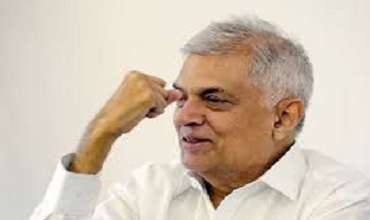
Former President Ranil Wickremesinghe returns
Former President Ranil Wickremesinghe today returned to Sri Lanka after receiving medical treatment in Singapore.


Related Articles
Top stories of the day
- 13/04/2026 - 130 - 0
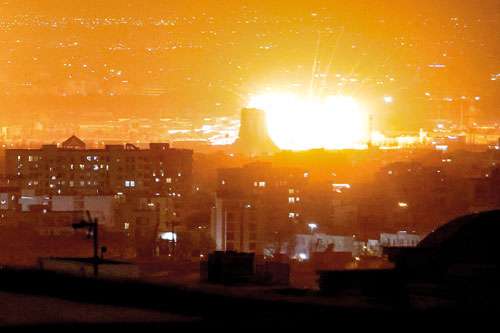
No Lankan left unaffected by US-Israeli war on Iran
- 12/04/2026 - 88 - 0
Impractical school guidelines trip up heatwave response
- 12/04/2026 - 63 - 0
Rising costs sour festive mood for some
- 12/04/2026 - 32 - 0
Leave Comments