- Last Update 2026-05-15 18:50:00


NDB Bank leads multi-stakeholder effort to safeguard the Negombo Lagoon
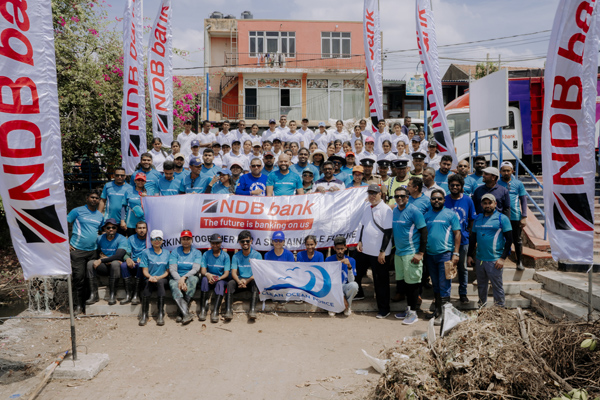
NDB Bank recently spearheaded a large-scale environmental clean-up initiative at the Negombo Lagoon, reinforcing its long-term commitment to environmental sustainability through its ongoing “Adopt a Lagoon” programme in partnership with Clean Ocean Force.
The initiative brought together over 200 participants, including NDB Bank staff volunteers, the Mayor and representatives of the Negombo Municipal Council, the Sri Vimukthi Women Association, the Negombo Divisional Secretariat, the Department of Coast Conservation and Coastal Resource Management (CCD), the Sri Lanka Air Force, and the Sri Lanka Police Environmental Division, the bank said in a media release.
During the clean-up, teams cleared lagoon edges and surrounding mangrove islands, removing more than 3,000 kg of non-biodegradable waste from the fragile environment. The collected waste included 359 kg of PET bottles, 514 kg of glass, and over 2,300 kg of mixed waste comprising polythene, yogurt cups, rigifoam, food wrappers, e-waste, and metal. Approximately 50–60 per cent of the mixed waste will be directed to the Kerawalapitiya Waste-to-Energy Power Plant, while PET bottles will be sent for recycling, ensuring responsible post-collection waste management.
The Negombo Lagoon, a shallow basin estuary connected to the ocean by a single narrow channel, plays a vital ecological and economic role in Sri Lanka’s coastal landscape. Despite its biodiversity and importance to surrounding communities, it remains highly vulnerable to pollution and environmental degradation. Cleaning and maintaining the lagoon is therefore critical not only for environmental conservation, but also for public health, fisheries, tourism, and local livelihoods.
Commenting on the initiative, Lasantha Dasanayaka - Vice President, Human Resources stated, “At NDB, sustainability is embedded in our corporate philosophy. Protecting ecosystems such as the Negombo Lagoon is not only an environmental responsibility but a national imperative. By fostering collaboration across public institutions, private sector stakeholders, and community groups, we are creating meaningful, measurable change that will benefit future generations.”

-
Still No Comments Posted.









Related Articles

Top stories of the day
- 15/05/2026 - 45 - 0

Foreign Minister on official visit to Belarus
- 15/05/2026 - 20 - 0
Heavy showers to continue in several provinces, over 30,000 affected
- 14/05/2026 - 81 - 0
Leave Comments