- Last Update 2026-02-28 17:51:00


Reimagining International Relations from a Global South Perspective: A critical review
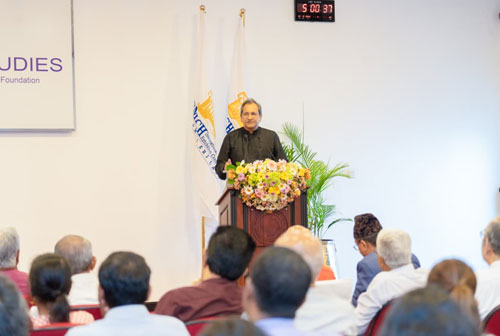
Address by Ambassador (Retd.) Ravinatha Aryasinha, former Foreign Secretary and Executive Director, Regional Centre for Strategic Studies (RCSS), at launch of Prof. Gamini Keerawella’s book ‘Reimagining International Relations from a Global South Perspective’, the Bandaranaike Centre for International Studies (BCIS), Colombo on 24 February 2026. A presentation of the book was made to the Chief Guest, Hon. Dr. Harini Amarasuriya, Prime Minister of Sri Lanka, during the launch, which was also graced by the presence of former President, Chandrika Bandaranaike Kumaratunga.
I wish to congratulate Prof. Keerawella, for having undertaken this mammoth task of seeking to capture, from ‘a global south perspective’, the multiple facets of scholarship of International Relations. He has, as always, been meticulous in his research, and also lucid in conveying to the reader, complex ideas and their interconnections, in an uncomplicated way. I am not in the habit of encouraging taking shortcuts, particularly with my students around - but if pressed, here is a book, with references to every major scholar in the 7 areas identified, in 440 pages, at a modest price.
We are honoured that the Hon. Prime Minister graced this occasion, and thankful for her inspiring words. She has left much food for thought - which I am hopeful our students will consider engaging with, as they proceed with their presentations and dissertations.
This is the 7th book, in fact the 3rd authored or co-authored by Prof. Keerawella, published under the auspices of the BCIS, over the past couple of years. It is a reflection of BCIS’s continuing commitment to bring into the public domain, quality academic literature that benefits both scholars and Sri Lankan students who pass through these halls and beyond. I want to commend President Kumaratunga, for through the BCIS, continuing to support the publication of such texts, at a time individually doing so is prohibitive and also more costly to the buyer, and the Bandaranaike Memorial National Foundation (BMNF) for making this possible.
Turning to the volume launched today, in ‘Reimagining International Relations from a Global South Perspective’, at the outset, Prof. Keerawella makes clear that a Global South perspective is not simply a matter of geographical focus; it is an epistemic stance that seeks to recover marginalized voices, experiences, and knowledge that have long been silenced or subordinated in mainstream discourse. He goes on to emphasize that, the choice of the phrase “a Global South Perspective” is deliberate. It signals an awareness that there is no single, homogeneous standpoint from which the Global South speaks’. To speak of a perspective, then, is to situate this volume’s argument within that broader, evolving mosaic—to offer one possible articulation among many, without claiming representational authority over them. Prof. Keerawella emphasises, it is an invitation to dialogue, not a declaration of orthodoxy.
As is customary by a reviewer, I intend to take up Prof. Keerawella’s ‘invitation to dialogue’ and commence a conversation on this important categorization in the latter part of this presentation, but first let me outline the valuable insights contained in this Book, as an appetiser.
The first chapter on IR Theory, points out - in each of the ‘isms’, ingredients as it were, that could contribute to a better understanding of the ‘Global South’. Here he highlights Raúl Prebisch and Andre Gunder Frank’s ‘dependency theory’, Neta Crawford’s ‘normative constructivism’, Sanjay Seth’s ‘Decolonial Critique’ and Amitav Acharya’s concept of ‘Global IR’ as having advanced a reformist, yet transformative agenda for the discipline. He observes that, “Collectively, their respective projects of rethinking, decolonizing, and globalizing International Relations illuminate how the Global South can contribute to the field not merely as a repository of empirical cases, but as a source of conceptual reflection and theoretical innovation”.
The second chapter which examines the transformation of International Security Studies, by foregrounding the lived insecurities of the Global South—ranging from poverty and structural violence to environmental vulnerability and social fragility, demonstrates why concepts such as human security gained salience as corrective and complementary frameworks, concerning the global south.
The third chapter pays analytical attention to the dynamics of regionalism with special focus on South Asia and the experience of the SAARC. It calls for reimagining regional cooperation in South Asia beyond rigid institutional templates, advocating for inclusive, flexible, and people-centered modalities rooted in the specific political and social realities of the Global South.
The fourth chapter addresses international organizations and international regimes as central pillars of contemporary global governance, with particular attention to their implications for the Global South. The chapter reveals how Global South states have simultaneously been constrained by inherited governance structures and mobilized collective strategies to contest inequities and assert greater voice.
The fifth chapter which focuses on Foreign Policy Analysis (FPA), situates it within a rapidly evolving global environment shaped by globalization, technological transformation, and the Fourth Industrial Revolution, paying particular attention to the strategic choices made by Global South states.
The sixth chapter traces the long historical arc of diplomatic practice, demonstrating how modes of representation, negotiation, and cooperation have evolved in response to changing political, social, and technological contexts. From a Global South perspective, the chapter underscores both the opportunities and constraints of particularly science diplomacy.
In the final chapter, Prof. Keerawella discusses the notion of national self-determination.
He underscores its contradictions in theory, and its praxis in the post-Cold War context, tracing the ways in which self-determination has been invoked and contested in modern international relations.
Besides joining a very small league of international scholars (some already referred to) who have dared to challenge Western theoretical approaches in the study of IR and sub-fields and emphasized the need for an alternative ‘Global South’ reading, Prof. Keerawella becomes the first Sri Lankan to do so in any considered manner. His volume is also rare, in that in general, few Sri Lankans have sought to engage with and contribute to the theoretical literature of International Relations and Foreign Policy. His book has the additional advantage of being released at a time ‘International Relations’ - as we have been taught it and understood it, is under severe strain to explain contemporary developments in a conceptual and theoretical manner, and there is a serious vacuum to be filled, not just in understanding, but in order to change the current predicament.
While the book reaffirms the ‘global south’ as a certain collective sentiment, assembling many of the conceptual building blocks and empirical insights necessary for its articulation, what it leaves to us is the task of synthesising these elements into a coherent and operational set of principles that can foster a unified front amongst the Global South, despite the vast diversity of the actors and states involved.
While I have no disagreement with Prof. Keerawella’s starting premise and end goal of the desirability of having ‘a Global South Perspective’ in the areas under study, however, as an observer and practitioner of international relations for most of my professional life since 1980
– 9 years as a journalist, 33 years as a diplomat, and post-retirement, and over 4 years from the vantage point of running IR and Strategic Studies focused institutions, while also teaching, and engaging in my own research, I do encounter some difficulty, and lament that operationally little has or is being done, to evolve a strategy that addresses the shortcomings so carefully pointed out in Prof. Keerawella’s book.
Looking back, I do not see a single cohesive ‘Global South’ consistently in play. Rather, I see a multitude of ‘Global Souths’ – depending on the issue, competing opportunistically and often working at cross purposes, and all eventually getting played out by the continuing structural heft of the ‘Global North’.
This is no fault of Prof. Keerawella, or of the rich ingredients he brings together in this volume. Rather, it reflects the political reality that the ‘Global South' recipe has not yet been fully translated into an appetising dish.
I am no chef, and time does not permit me to elaborate from the different vantages points
I have experienced it from - but I do believe there is a compelling case that could be made for action, which needs serious reflection and attention.
To put it another way, without making value judgements on the rights and wrongs of the respective action, I wish to pose two sets of questions, confining myself to events of the past 4 years or so;
First, what did the ‘Global South’ do in the cases of Ukraine since 2022, of Gaza since 2023, of Sudan since 2023, on actions in the South-China Sea in recent times, following the imposition of ‘Reciprocal Tariffs' throughout 2025, or in the case of Venezuela last month?
- Did they speak together?
- Did they vote together?
- Did they fight together?
Similarly, second, what will the ‘Global South’ do, God forbid, if there is to be a conflict on Iran, Cuba, the Panama Canal, Morocco-Algeria, DRC-Rwanda, or Taiwan, tomorrow?
- Will they speak together?
- Will they vote together?
- Will they fight together?
If I were to play devil's advocate, I would be tempted to ask: if these coalitions neither speak, vote, nor act together, what kind of analytical and normative work can the category 'Global South' realistically achieve? Rather than assuming a unity that does not yet exist, how might we need to refine it?
To this end, I wish to posit, that the category of ‘Global South’ could be analytically more useful, if, as Max Weber suggested, it be used as an ‘ideal type’[1] – that might not be realized, but must be sought to be approximated. 'Global South' functions best as a Max Weber-inspired 'ideal type': an abstract model used not as a description of an existing state, but as a heuristic tool to clarify the degree to which specific regions approximate or diverge from its core characteristics.
Such an approximation cannot merely be imagined; it has at least to be attempted in practice.
What I am suggesting is not utopian. Historically, there is precedent that has been realized by the Non-Aligned group of countries – which by no means perfect, but was effective in its heyday during the 1960s, 1970s, and early 1980s. Unfortunately, rather than being reformed and modified at the end of the Cold War, it has been tossed away.
Admittedly, those were different times, but for purposes of encouraging the dialogue and debate Prof. Keerawella wanted us to have stemming from his book, and in order to draw inspiration, let me suggest 4 factors that made Non-Alignment work as an operational strategy, while it did;
- There was a clearer ‘Framework of Operation’ – the Non-Aligned MOVEMENT, which incidentally in this year we commemorate the 50th anniversary of the hosting of the 5th Summit in Sri Lanka in 1976 at this very venue the BMICH.
- There was also a clear ‘Other’ - the cold War driven Western alliance on the one hand, and the Warsaw pact countries, which had competing ideologies – and which broadly Non-Aligned countries preferred not to emulate in toto.
- There was further an alternate Politico-Economic and Legally grounded Agenda - which saw expression through the UN Special Session on Disarmament, an operationally stronger UNCTAD, and a international legal regime the UN Law of the Sea (UNCLOS), in which NAM countries played crucial roles.
- There was also ‘a like-minded collective leadership’ - which, spare a few, more often than not, dared to demonstrate objectivity between the West and the East – and resisted being unquestioning followers. Though they might not have been loved by the ‘West’, or for that matter by the ‘East’, but they were broadly respected by both.
While newer formations such as the G77, the BRICS, the SCO, alongside regional groupings such as the RCEP, the ASEAN, the AU, the GCC, and BIMSTEC have sought to fill this space, they remain, at best, partial substitutes, lacking the normative coherence and political solidarity that characterized the early NAM efforts that resulted in effective collective action demands.
It is ironic, that at a time when the ‘Global North’ is in disarray, and some its own constituents have made bold to say that this is not a “transition” but a “rupture” of the US-led rules-based international order, that there is no cohesive ‘Global South’ alternative.
The real question before the ‘Global South’ today should be, as to what conditions and mechanism could lead us to position ourselves better, to consolidate such a collective, and most importantly whether there is the political will to do so?
If not, we must at least be honest about current limits - that many states with even some capacity, are compelled to hedge, while those without meaningful leverage remain largely ‘bystanders’ in the global order.
However, if we recognize that this situation is not tenable and that we wish to serve a higher cause, we should do something about it and try to create ‘sufficient conditions’ that could more actively and tangibly approximate ‘a Global South’- which can ‘bracket’ its differences, find unity in what is most important, and avoid the temptation of flirting for temporary gain or glory.
This is the thought I wish to leave you with today, in the hope that, as envisaged by Prof. Keerawella, this volume will not be the last word on ‘a Global South perspective’, but a starting point for precisely the kind of critical, self-reflective conversation that can turn it into a more grounded, plural, and effective practical programme and call to action.

-
Still No Comments Posted.
- February 20, 2026 - 188 - 0
Maithree Wickramasinghe requests two weeks to give CID statement
Maithree Wickramasinghe, wife of former President Ranil Wickremesinghe, who was due to appear before the Criminal Investigation Department (CID) today to record a statement, has requested a two week period to provide her statement.


- February 25, 2026 - 99 - 0
Senior ex public officials in bribery net
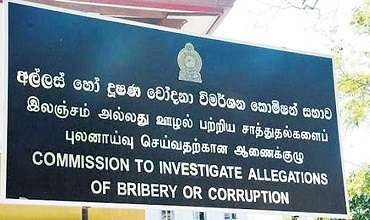
A former secretary to the Ministry of Trade , former additional secretary and chief finance official have been arrested over corruption charges , the Commission to Investigate Allegations of Bribery and Corruption said.
Related Articles

Top stories of the day
- 27/02/2026 - 65 - 0
Leave Comments