- Last Update 2026-05-11 17:31:00


Less vegetables on the plate – a cause for concern?
For centuries, the typical Sri Lankan meal has been the iconic rice and curry. For Sri Lankans, ‘curry’ traditionally refers not just to meat or fish, but to a rich variety of vegetables, yams, legumes, and cereals beyond rice. A typical Sri Lankan variation of a vegetable-based dish, the ‘hath maluwa’ – an assortment of many vegetables and yams is still considered as a delicacy prepared for special seasons and events. While often viewed as cultural traditions, these culinary practices reflect a profound indigenous understanding of human nutrition and wellbeing. As society has evolved beyond foraging and subsistence farming, modern households now rely on purchasing vegetables, making it increasingly challenging to sustain the traditional “multiple-curry” meal. Against this backdrop, the recent surge in vegetable prices has left much of society shocked and feeling helpless.
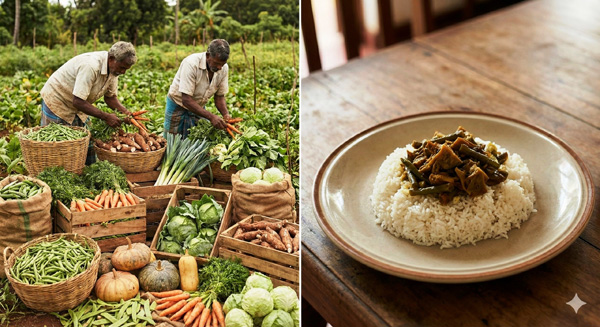
Balanced meals and wellbeing
Sri Lankan society deeply believes that correlation of well-balanced meals leads to the wellbeing of everyone. As vegetable prices move out of reach for the average household, family meals begin to lose their balance and nourishment. In the face of epidemics, an economic crisis exacerbated by fertilizer issues, natural disasters and climate change impacts, Sri Lanka’s agriculture sector, particularly vegetable cultivation, is facing a serious challenge. This has led to rising vegetable prices, placing pressure on the purchasing power of the average citizen. Within the last 4-5 years a significant transformation happened in the market prices of vegetables. According to the prices issued by the Government and the Central Bank of Sri Lanka, a kilogram of vegetables that were within the price range of Rs. 250-300 at the beginning of 2022 reached Rs. 400 and beyond by December. By the end of 2023 the prices grew even higher reaching Rs. 700. Marking a significant increase in vegetable prices in recent history, a kilogram of vegetable was priced at Rs.1,000 by January 2024. By 2025, these increased prices dropped by approximately 50% and reached a steady level at Rs.400-500. With the calamity that followed due to Cyclone Ditwah, prices instantly rose by 35-40%. In the aftermath of the storm, as vegetable cultivation was reestablished and harvests began reaching the market, prices declined comparatively, though not to previous levels.
Importance of fresh produce in meals
Sri Lanka is rich in a wide variety of vegetables and natural food resources, although consumption is often limited to only a few types. Many locally grown vegetable varieties are now available at reasonable prices in popular markets and selected supermarket chains. By choosing these alternatives, households can still meet their nutritional needs. Observations of purchasing behaviour suggest that high vegetable prices have created a psychological barrier for some consumers. However, reducing or eliminating vegetables from meals is not a healthy response. Medical experts advise that such habits can lead to multiple nutrient deficiencies, with long-term health consequences that may cost far more than the price of vegetables themselves. As doctors and nutritionists emphasise, inadequate vegetable consumption can cause children to miss out on essential vitamins, minerals, and micronutrients critical for healthy growth. State medical statistics indicate a 30% increase in vitamin A deficiency among children in Sri Lanka, with proven impacts on growth, bone strength, and immunity. Although the World Health Organization recommends a daily intake of 400 grams of vegetables, current consumption levels fall well short of this benchmark. At the same time, vegetable farmers face growing challenges that often go unnoticed by the public. When consumption and purchasing decline, farmers struggle to earn enough income to cover their costs. Farmers from areas such as Matale, Nuwara Eliya, and Badulla have publicly stated that if their produce remains unsold, they may be forced to abandon cultivation in the next season. This would further reduce already low harvest levels, leading to greater shortages and even sharper increases in vegetable prices in the future.
Way ahead
Private and public initiatives aimed at introducing climate-resilient practices offer some relief in addressing the current crisis and is a step in the right direction. As consumers, it is important to recognise the health impacts of reduced vegetable consumption as well as its effect on farmers’ livelihoods. Given Sri Lanka’s rich diversity of fresh produce, nutritious local vegetables and fruits remain accessible through traditional markets and supermarkets alike. Therefore, when a disaster or crisis impacts the agriculture industry, it is essential not only to examine how prices respond but also to assess the broader implications of reduced consumption of fresh produce on nutrition, public health, and food security. (Nadeeka Disanayake)

-
Still No Comments Posted.








Related Articles

Top stories of the day
- 11/05/2026 - 10 - 0

Former Energy Minister endorses three points at pre-trial session
- 11/05/2026 - 56 - 0

CPC plans refinery expansion; new pipeline and Trinco tank overhaul on the cards
- 11/05/2026 - 31 - 0
Leave Comments