

By Dr sir Don Buddika Sri Ranga kumara vittahachchi MD(TM), Msc, PhD (Alternative medicine )
Abstract
Anxiety and depression are linked to gut–brain axis (GBA) dysregulation and often respond inadequately to conventional treatments. This study investigated acupuncture’s effects on anxiety, depression, and GBA-related symptoms in Sri Lanka using a sequential explanatory mixed-methods design. Quantitative measures (GAD-7, PHQ-9) demonstrated significant symptom reduction, influenced by treatment duration and prior acupuncture experience. Qualitative interviews revealed improved mood regulation, interoceptive awareness, and digestive health. Integration of findings indicates that acupuncture benefits mental and gastrointestinal health through physiological and psychosocial pathways, though cost and accessibility may limit use. Acupuncture is thus a culturally appropriate, holistic intervention for comorbid conditions.
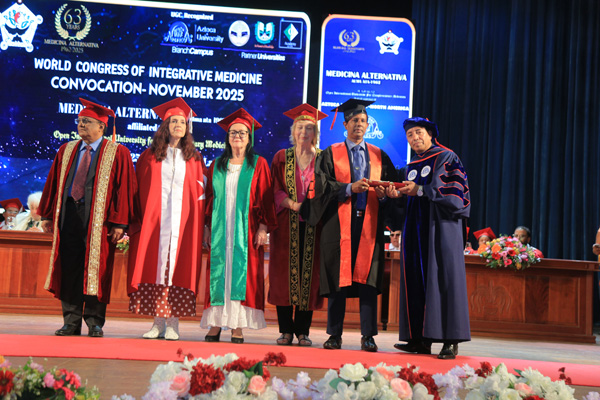
A proud moment at the 63rd World Congress of Integrative Medicine: Dr. Sir Don Buddika Sri Ranga Kumara Vittahachchi receives his Doctor of Philosophy (PhD) from Professor Dr. Ricardo Saavedra, Director & Chair of International Programs, Azteca University of North America, during the convocation ceremony organized by Medicina Alternativa on 26th November 2025.
Keywords: Anxiety, Depression, Gut–Brain Axis, Acupuncture
Introduction
Anxiety and depression are major global health concerns with limitations in conventional treatments. The gut–brain axis is central to their pathophysiology. This study aims to explore the regulatory effects of acupuncture on the gut–brain axis and its potential to alleviate anxiety and depression, particularly within the Sri Lankan context.
Literature review
The gut–brain axis (GBA) is central to the development of anxiety and depression through complex interactions among gut microbiota, immune activity, neuroendocrine regulation, and vagal signalling. Disruptions such as microbial dysbiosis, chronic inflammation, hypothalamic–pituitary–adrenal (HPA) axis dysfunction, and reduced vagal tone contribute to neuroinflammation and emotional dysregulation. Acupuncture, a key modality of Traditional Chinese Medicine, has demonstrated potential to modulate these interconnected pathways. Evidence indicates that acupuncture can enhance vagal activity, regulate neurotransmitters, reduce pro-inflammatory markers, normalise stress responses, and improve gut microbiota balance, thereby supporting emotional regulation and stress resilience (Mayer et al., 2014; Bonaz et al., 2018). Clinical studies further report reductions in anxiety and depressive symptoms with minimal adverse effects, supporting its therapeutic value (Amorim et al., 2018). Within the Sri Lankan context, where mental health resources are limited and cultural acceptance of traditional therapies is high, acupuncture represents a cost-effective, holistic, and culturally congruent integrative intervention aligned with GBA-centred mental healthcare approaches (Carabotti et al., 2015; Cryan et al., 2019).
Methodology
This study employed a sequential explanatory mixed-methods design to investigate acupuncture’s effects on anxiety and depression via the gut–brain axis. Quantitative data from validated instruments (GAD-7, PHQ-9) were complemented by qualitative interviews exploring lived experiences, with integrated analysis ensuring methodological rigor and alignment with biopsychosocial and TCM frameworks.
Data analysis and findings
This study employed a mixed-methods approach to examine acupuncture’s effects on anxiety, depression, and gut-brain axis (GBA) symptoms. Quantitative results showed significant reductions in anxiety (GAD-7), depression (PHQ-9), and GBA symptoms, with treatment duration and prior acupuncture experience mediating improvements.
Qualitative interviews supported these findings, highlighting enhanced emotional resilience, mood regulation, and digestive health. Participants emphasized cumulative benefits over multiple sessions and increased interoceptive awareness, revealing insights not captured by surveys.
Integration revealed convergence between statistical outcomes and personal narratives, complementarity through explanatory depth, expansion via gut-brain awareness, and divergence in barriers to treatment (cost, access, stigma). Triangulation validated the mediation effects and underscored the importance of trust and therapeutic alliance.
Overall, the findings indicate that acupuncture improves psychological and gastrointestinal symptoms through physiological and psychosocial pathways, with duration, experience, and subjective engagement enhancing efficacy, while structural barriers may limit sustained application.
Recommendations
This study highlights acupuncture as a valuable intervention for anxiety, depression, and comorbid gastrointestinal symptoms. Recommendations include integrating acupuncture into multi-modal treatment plans, educating patients on the gut-brain axis, and setting realistic expectations for cumulative benefits. Policymakers should improve accessibility through insurance coverage, credential standardization, and funding for research. Acupuncturists are encouraged to gain training in psychological comorbidities, cultural competence, interdisciplinary collaboration, and self-care. Collectively, these measures support a holistic, evidence-based, and culturally sensitive model of care, positioning acupuncture as a key component in modern mental health and gastrointestinal treatment strategies.
References
Amorim, D., Andersen, M.L. & Drummond, L., 2018. Acupuncture for depressive symptoms: A systematic review and meta‑analysis. Journal of Affective Disorders, 234, pp.14–23.
Bonaz, B., Bazin, T. & Pellissier, S., 2018. The vagus nerve at the interface of the microbiota–gut–brain axis. Frontiers in Neuroscience, 12, p.49.
Carabotti, M., Scirocco, A., Maselli, M.A. & Severi, C., 2015. The gut–brain axis: Interactions between enteric microbiota, central and enteric nervous systems. Annals of Gastroenterology, 28(2), pp.203–209.
Cryan, J.F., O’Riordan, K.J., Cowan, C.S.M., Sandhu, K.V., Bastiaanssen, T.F.S., Boehme, M., et al., 2019. The microbiota–gut–brain axis. Physiological Reviews, 99(4), pp.1877–2013.
Mayer, E.A., Knight, R., Mazmanian, S.K., Cryan, J.F. & Tillisch, K., 2014. Gut microbes and the brain: Paradigm shift in neuroscience. The Journal of Neuroscience, 34(46), pp.15490–15496.















Leave Comments