- Last Update 2026-04-02 18:41:00


Pearls and the sea: A chronicle from Mannar
By Sachindra Amarasekara
This piece was shaped by time spent in Mannar, walking its shores, visiting the ruins of Doric House, and watching the sun rise and set over the Gulf of Mannar. I travelled there with close friends who share a deep respect for history and heritage, staying in Silavathurai, where our evenings often turned to long conversations about the past. I stood where the pearl divers once stood. The pearls they recovered may still exist, worn or displayed far from Mannar, yet the names of the men who descended into the water are largely forgotten.
This article is written in remembrance of them.
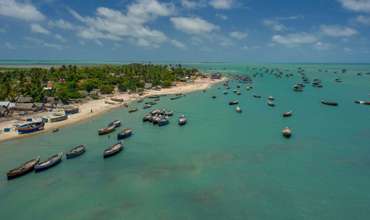
The Gulf of Mannar glimmered under the early morning sun, its calm surface stretched smooth as glass, a deceptive tranquility masking the perilous depths below. The sea looked almost kind at this hour, tinted pale blue and silver, the horizon blurred by heat and mist. A faint breeze moved across the water, gentle enough to deceive, steady enough to carry memories.
For Maruthupandi, a 27-year-old pearl diver from Pesalai, this was just another day in the short pearl season a few fevered weeks each year, when men like him gambled their bodies and breath for the shimmer of pearls they would never own. He stood barefoot on the sand, the grains already warm beneath his feet, watching the boats prepare. The scent of salt mixed with drying nets and damp wood. Somewhere inland, a conch shell sounded, low and resonant. With the conch shell's call, the season had begun, propelling the divers into their annual ritual of risk and reward.
Before the dive
Maruthupandi was born into the trade. His father had dived before him, his grandfather before that. In Pesalai, pearl diving was not a profession one chose. It was an inheritance, passed down like debt. Each season's earnings barely covered what was owed to traders, mended nets, and kept rice in the pot until the next year. There was never enough left to escape, never enough to imagine another path.
From his earliest memories, he recalled the pre-dawn rituals marking the season’s start. Fleets of oru canoes gathered along the shore, their narrow wooden bodies rocking gently in the half-light. The men spoke little at that hour. Some rubbed coconut oil over their skin, believing it would keep the cold from seeping into their bones below the surface. Others adjusted ropes, checked knots, or sat quietly facing the sea.
Women stood at the water’s edge, murmuring blessings, tying charms around wrists, hiding their fear behind composed faces. Children clung to saris and watched in silence. Nearby, the low rhythmic chants of shark charmers rose and fell, words carried down through generations, meant to bind danger with sound. Whether the chants held power or not did not matter. Faith was another form of protection.
As the sun climbed higher, Mannar no longer felt like a fishing village. As the sun climbed higher, Mannar transformed into a temporary world of commerce and authority. Traders arrived from Madras and Calcutta. Arab merchants came with scales and cloth awnings. European agents appeared in linen suits, their ledgers crisp, their hands clean. Languages overlapped in the air: Tamil, Arabic, English spoken over the creak of boats and the slap of waves.
At the centre of it all stood Doric House in Arippu, where the British Governor resided during the fishery. The neoclassical bungalow, with its tall white Doric columns and symmetrical lines, overlooked the Gulf like an indifferent sentinel. Built in 1804, it was meant to project order at the edge of the empire. From its shaded verandahs, officials surveyed the sea, calculated yields, and issued instructions for the following day’s dives. Tea was served. Ledgers were signed. Profits were anticipated.
To the divers, Doric House was a palace for the powerful, its cool stone floors and sea-facing windows a cruel contrast to the palm-leaf huts where they lay on mats at night, bodies aching, skin cracked and burned by salt. From those verandahs, the sea appeared picturesque. From the boats, it was something else entirely.
The stench of wealth and decay
Even before reaching the dive site, Maruthupandi could smell it. The oysters. Great heaps of harvested pearl oysters lay piled along the shore, left deliberately to rot beneath the sun. Their flesh softened and decayed over days, making it easier to extract the pearls buried within. The smell was overpowering, sharp, sour, and heavy. It crept into the throat and settled there, clinging to hair, skin, and clothing. No amount of bathing could remove it. It was the smell of wealth and waste combined. The scent of beauty born from decay.
Seabirds circled above the piles, drawn by the rot. Flies swarmed in restless clouds. Children were warned to stay away, yet curiosity always pulled them closer. Workers turned the heaps with sticks, searching patiently, methodically, for the small hard glimmer hidden within soft ruin. By nightfall, the stench spread across the camps, seeping even into sleep.
The descent
That morning, the boats pushed off just after sunrise. Offshore, the Gulf was deceptively calm, the water rippling gently under the rising heat. The horizon shimmered in the distance. From afar, the fleet looked almost ceremonial, small dark shapes scattered across a silver field. Maruthupandi crouched on the edge of his canoe, the lead diving stone tied securely to his waist. His woven basket hung at his side, light now, soon heavy with oysters or empty, if luck turned against him. He glanced once toward the shore, where figures appeared small and indistinct. Then he focused on the water below.
At the signal, he plunged.
The stone dragged him down fast, the world narrowing to pressure and sound. His ears throbbed. His chest tightened. The water darkened as the surface vanished above him. Light fractured into wavering shafts. Below, the seabed emerged, uneven coral, shifting sand, and clusters of oysters clinging stubbornly to rock. He worked quickly, fingers numb, prying shells loose and stuffing them into his basket. Fine particles of sand clouded the water with each movement. He counted his breaths without realizing it, a rhythm drilled into him over years.
The sea pressed against him from all sides. When his lungs began to burn, he tugged the rope. He broke the surface gasping, air tearing back into his chest. The basket was hauled up, its contents dumped into the boat. There was no rest. Another diver slipped into the water. Maruthupandi wiped his face, steadied himself, and prepared to descend again.
The toll
By midday, the sun beat down mercilessly. The water shimmered. Sweat dried almost instantly on skin. Maruthupandi had already dived more than forty times. His limbs burned with exhaustion. His eardrums throbbed with a dull, constant ache. His fingers were raw, nails cracked, skin split open by shells and coral. Saltwater seeped into the cuts on his legs, stinging like fire.
For this, the pay was pitiful, mere coins, and only if the oysters yielded pearls. Even then, the profit belonged to others. Inside Doric House, pearls were catalogued and weighed, destined for Colombo’s markets and then onward to London, Paris, or Amsterdam. They would be set into necklaces and rings, worn at balls and banquets by people who would never know the smell of the shore or the weight of the stone.
The divers’ names were never recorded. Only numbers. Only losses. The sea took its share without mercy. Maruthupandi had seen men surface coughing blood, stung by jellyfish, shaken by unseen currents. Sharks were spoken of in whispers. He remembered the day his cousin simply did not return. Maruthupandi had seen his own cousin vanish this way, the rope rising slack, the basket empty. The sea closed over him without a witness.
The final dive
That afternoon, the weather began to change. The wind stiffened, chopping the surface into small restless waves. Darker clouds gathered low on the horizon. The boats rocked more sharply now. Still, the overseers demanded one final haul before returning to shore.
Maruthupandi dived again.
Almost immediately, something felt wrong. The pressure in his chest rose sharply, like a weight pressing inward. His vision blurred at the edges. The seabed seemed farther than before. He fumbled with the oysters, hands numb, movements slow. Panic flickered through him. He gave a weak tug on the rope.
Above, the crew hesitated, perhaps thinking the signal had come too soon. Seconds stretched. By the time they hauled him up, his body hung limp. Water spilled from his mouth. His eyes stared without focus. They tried pounding his back, forcing breath into his lungs, calling his name into the wind. It was useless. The sea had already claimed him.
Aftermath
They wrapped his body in a coarse fishing net and carried him ashore. On the beach, his wife’s cry rose above the sound of the waves, sharp and unrestrained. Around her, life continued. Boats landed. Baskets were emptied. Oysters were added to the rotting heaps. The smell drifted thick in the evening air as the sun sank red into the Gulf.
The next morning, nothing changed. Breakfast was served at Doric House. Merchants prepared their scales. Boats were loaded for another day’s diving. In the overseer’s logbook, Maruthupandi’s life was reduced to a single line: One diver lost at 2:17 p.m.
His final basket was opened. A few pearls were found, small, pale, flawless. They would travel far. His family was left with debts and silence. In time, his youngest son would take his place. For in Mannar, the sea gave life, took life, and cared for neither. The Gulf shimmered once more under the morning sun, indifferent yet eternal.

-
Still No Comments Posted.



- March 26, 2026 - 437 - 0
50 more Forests declared under Wanaspati programme
The Ministry of Environment has taken steps to declare an additional 50 forests as protected reserves, Under the ’Wanaspati’ National Programme.


- March 25, 2026 - 203 - 0
Former SIS chief Sallay hospitalised
The former Head of the State Intelligence Service, Major General (Retired) Suresh Sallay has been admitted to the Colombo National Hospital after his medical condition was notified to the Magistrate.
Related Articles

Top stories of the day
- 02/04/2026 - 57 - 0
Water cuts commence from today in Colombo district
- 02/04/2026 - 109 - 0

Govt. introduces special fuel app for tourists
- 02/04/2026 - 55 - 0
Leave Comments