- Last Update 2026-04-27 12:59:00


Denmark’s Dilemma
By Dr Ruben Thurairajah
Empires, when they speak of values, usually mean geography. This double speak masks a practical desire for territorial control, resource extraction and strategic geographical positioning.
Afghanistan was one such geography. Greenland is another. Between them stands Denmark: a country that once practised empire modestly, forgot it thoroughly, and now discovers that history has not forgotten it at all.
Afghanistan entered the 21st century already defeated by time. The American-led war that began in 2001 arrived with moral clarity and administrative confidence. Terror would be destroyed. Democracy would be installed by guns and explosives. A state would be assembled from templates, conferences, and budgets by foreigners. For South Asians, this language was familiar. We had heard it before, spoken with different accents.
A War Explained to the World
The war was presented as necessity, then as virtue. What began as retaliation quickly became improvement. Institutions multiplied. Strategies were refined. Reports thickened. Afghanistan became a place where foreigners explained the country to itself.
Denmark joined early, quietly, without theatrical politics. NATO had spoken; Article 5 had been invoked. Loyalty was assumed to be both duty and insurance. Danish soldiers went to Helmand, that imperial testing ground where British confidence and Soviet certainty had already dissolved. They fought well. They died efficiently. Forty-three names were added to a small nation’s ledger of obligation.
Denmark’s Forgotten Empire
There was an older echo here. Denmark had once come to Asia too. Its first attempt, in the island then called Ceylon, failed. The climate, the politics, and the arithmetic of distance proved uncooperative. Denmark withdrew.
Soon after, it succeeded elsewhere. On the Coromandel Coast of Tamilnadu, Denmark took possession of the fishing village of Tharangambadi; Tranquebar to Europeans; and built Fort Dansborg. It was a modest structure for a modest ambition: a trading post, a mission station, a foothold. There was no grand conquest, only commerce, conversions to Christianity and patience under the protection of stronger empires.
Denmark held Tranquebar for over two centuries. It sold it to the British in 1845 and moved on. The episode required no national reckoning. Empire building had been something Denmark tried. Since they weren’t good at it, it was shelved.
Money as Moral Performance
As the war lengthened, the figures grew surreal. The United States spent over two trillion dollars. Denmark added its share in aid, training, and reconstruction. Measured crudely, the war cost around fifty thousand dollars per Afghan—enough, on paper, to rebuild the country several times over.
In practice, the money circulated among foreign contractors, consultants, and security firms. Ministries were built that could not stand without foreign salaries. Elections were held that produced legitimacy only on PowerPoint. Sovereignty became a performance sustained by donor attention.
South Asians recognised the pattern immediately. We had lived inside similar illusions.
Counting the Dead
The numbers hardened. Roughly 176,000 people were killed directly by the war. Afghan civilians; tens of thousands officially counted; absorbed a violence described to them as progress. Afghan soldiers died in even greater numbers defending a state that existed largely in international reports. Death became data; grief became background noise.
Denmark, like other allies, had done what was required. It had fought, funded, trained, and believed. What it had not done was decide.
The Ending Without Meaning
In 2021, the war ended not with defeat but with evaporation. Kabul fell. The Afghan army dissolved. The Taliban returned not as shock but as exposure. The twenty-year project collapsed in days, revealing that the war had never been Afghan in the first place.
For Denmark, the lesson was uncomfortable. Loyalty had not purchased influence. Sacrifice had not bought a voice at the ending. The alliance moved on.
Greenland and the Return of Geography
Then geography reappeared.
Greenland—vast, frozen, sparsely populated, the largest island in the world—entered American strategic imagination with the force of rediscovery. The Arctic was warming. Rivals were circling. Old habits returned. Greenland was suddenly too important to be left to Denmark, too strategic to be governed by consent alone.
The language hardened. Acquisition was discussed as inevitability. Denmark was recast not as ally but as custodian: temporary, insufficient, slightly in the way.
Greenland’s own leaders in Nuuk, the capital, were clear: no takeover, under any circumstances. Denmark invoked sovereignty, international law, self-determination. Europe rallied. The alliance frowned politely.
The Imperial Reversal
The irony is sharp enough to cut. Denmark once possessed Asian territory without consulting those who lived there. It exited empire quietly and reinvented itself as a moral state. Now it finds itself defending principles—consent, sovereignty—that history never demanded of it.
The difference, as always, is power.
Afghanistan and Greenland belong to the same imperial grammar. In one, America asked Denmark to risk lives for an abstract good. In the other, it asks Denmark to risk sovereignty for an abstract threat. In both cases, loyalty flows upward; restraint is expected below.
A South Asian Recognition
For South Asians, none of this is surprising. We have long known that alliances are hierarchies with better manners. That moral language masks strategic impatience. That small countries are valuable mainly as terrain: physical, moral, or symbolic. To be controlled, for extraction and strategic geographical positioning.
Tranquebar, Helmand, Nuuk: three places, three climates, one recurring lesson. Geography attracts power. Loyalty does not protect against it.
Empires forget. Small states remember. And history, though it pretends to move forward, remains faithful to its old arguments.

-
Still No Comments Posted.




- April 23, 2026 - 205 - 0
Fraud using SriLankan airlines name detected
A fraud carried out using the name of Sri Lankan Airlines has been uncovered.
- April 17, 2026 - 178 - 0
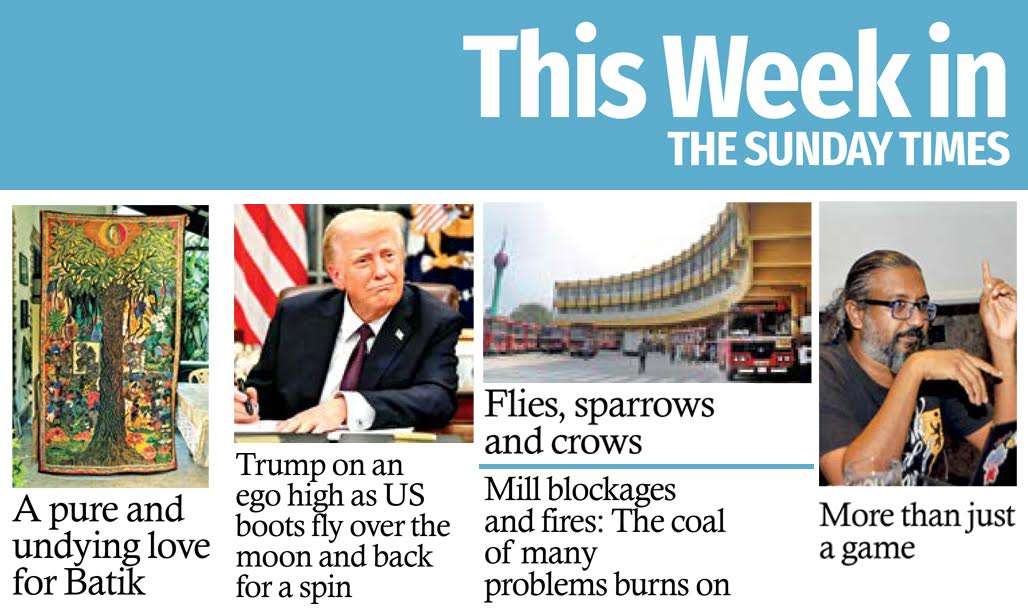
Your Sunday Times highlights for this week
Read this week’s Sunday Times for your interesting articles
- April 17, 2026 - 174 - 0
New Energy Ministry Secy appointed
President Anura Kumara Dissanayake appointed G.M.R.D. Aponsu as Secretary to the Ministry of Energy today.

Related Articles
Reform stalls as Sri Lanka delays overdue e-Procurement, key bills
- 26/04/2026 - 86 - 0
CID obtains eight-page statement from Ranil’s wife in four-hour interview
- 26/04/2026 - 73 - 0

ASG and senior Army officer clash over Easter Sunday case
- 26/04/2026 - 96 - 0
Treasury cyber heist widens; French loan papers missing
- 26/04/2026 - 114 - 0
Leave Comments